
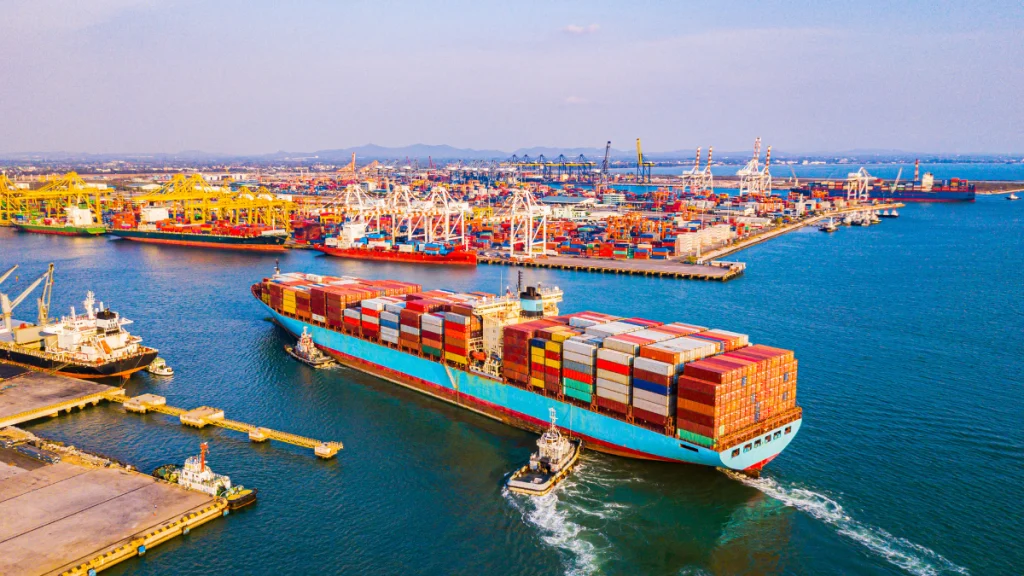
The CBAM and its impact on imports
What is CBAM?
The Carbon Border Adjustment Mechanism (CBAM) is a European Union tool designed to put a price on carbon emissions generated in the manufacture of certain imported products.
What's its purpose?
Its purpose is clear: to ensure that goods from abroad meet climate standards comparable to those required within the EU.
This measure is part of the European plan "Objective 55" (Fit for 55) , and represents a crucial step towards meeting the commitments of the Paris Agreement and the goal of achieving climate neutrality by 2050.
Combating carbon leakage: a priority
The CBAM was created as a direct response to the phenomenon of carbon leakage , that is, the relocation of industries to countries with more lax environmental regulations to avoid the cost of emitting CO₂ in Europe.
It also prevents the European market from being flooded with cheaper products manufactured without climate restrictions.
The logic is simple: if European manufacturers must pay for their pollution, imported products must bear a similar cost so as not to compete on unequal terms.
In this way, CBAM will level the playing field and protect both the environment and European industry.
Which sectors and products are subject to the CBAM?
Sectors included in the initial phase
The application of CBAM is not widespread.
It initially focuses on highly emitting sectors with strong exposure to international trade, such as:
- Cement
- Iron and steel
- Aluminum
- Fertilizers
- Hydrogen
- Electricity
These sectors were selected because of their high carbon intensity and their vulnerability to offshoring.
The production of steel or cement, for example, generates enormous amounts of CO₂.
Without measures like the CBAM, it would be cheaper to produce abroad without paying for emissions.
What products are included?
Not all assets in these sectors are covered, but the most representative ones are.
The regulation includes detailed lists by customs codes , such as certain types of nitrogen fertilizers, steel products, among others.
Planned extensions
The scope of the CBAM is expected to expand following a review in 2025.
It is possible that products derived from those already included may be added , or even indirect emissions may be covered.
Exceptions and special cases
To ensure the proportionality of the system, the CBAM includes some exemptions :
- Low-value shipments (less than €150), where administrative costs would outweigh the environmental benefits.
- Imports from countries with equivalent systems.
- US military personnel y special territories.
These exceptional cases allow the system to remain effective without creating unnecessary obstacles.
CBAM transitional period (2023–2025): learning phase
To facilitate the adaptation of all actors involved, the EU has established a transition period between 1 October 2023 and 31 December 2025.
During this phase:
- No direct financial costs apply.
- Importers must report quarterly CO₂ emissions associated with their products, without the need to purchase certificates.
- The information is managed through the CBAM Temporary Registry.
What is achieved with this phase?
- Get companies used to reporting their emissions.
- Allow authorities to fine-tune IT systems, processes, and controls.
- Collect data that will facilitate the transition to the final system.
This dress rehearsal is key to ensuring that, by 2026, all the gears of the CBAM are properly aligned.
Final period of the CBAM (from 2026): real cost of emissions
From January 1, 2026 , the CBAM comes into effect with all its economic implications.
Importers must:
- Declare annually greenhouse gas (GHG) emissions incorporated in their imports.
- Acquire and deliver CBAM certificates equivalent to those emissions.
How do certificates work?
- Each certificate represents one tonne of CO₂.
- Its price will be linked to the European emissions trading market (EU ETS).
- If the country of origin already applies an emissions fee, this is deducted from the certificate price.
For example, if importing 10 tons of steel involves 10 tons of CO₂, and the carbon price is €80/t, the importer will pay €800, unless prior partial payment is proven in the country of origin.
CBAM Declarants: requirement for importing
Importing companies must register as “CBAM authorized declarants” , obtaining permission from the Ministry for Ecological Transition (in Spain) and managing their certificates through a European electronic system.
Obligations and functions of key actors
Importers
- Report quarterly emissions (transitional phase).
- Obtain CBAM authorization (final phase).
- Acquire and deliver CBAM certificates.
- Maintain verifiable records and documentation.
National Competent Authority (NCA)
- Manage authorizations and certificates.
- Monitor compliance.
- Impose sanctions in case of violation.
Customs authorities
- Inform and advise in the transitional phase.
- Ensure, starting in 2026, that only CBAM products are imported by authorized declarants.
- Retain goods if requirements are not met.
European Commission
- Coordinates the CBAM system throughout the EU.
- Manages certificate registries and auctions.
- Monitors reports, detects irregularities and assesses impacts.
Producers in third countries
Although they are not required to do so, they can voluntarily register in the system to provide real emissions data.
This benefits its European customers, who will be able to avoid penalties for using estimated data.
Independent verifiers
From 2026 onwards, emissions declared by importers must be verified by accredited third parties.
They will act as auditors, confirming that the data provided is correct and traceable.
Why is CBAM a key climate tool?
The CBAM fills a historical gap in the fight against climate change : imported carbon.
Until now, climate efforts have focused on domestic production, while polluting products from abroad have been imported without penalty.
With the CBAM:
- Polluting relocation is avoided.
- Clean production is encouraged globally.
- The real effectiveness of European climate policies is improved.
Furthermore, it will impact prices : products with a high carbon footprint may become more expensive, encouraging the consumption of goods with a lower environmental impact.
Conclusion: CBAM as a pillar of the ecological transition
The CBAM represents a strategic commitment by the EU to a just and global ecological transition.
By incorporating the cost of carbon into imports, it strengthens European climate commitments and fosters cleaner and fairer competition.
Understanding this mechanism is essential for companies, authorities and citizens.
Not only will it change the way we import and produce, but it will also shape the future of international trade under climate criteria.

RRYP Global, import and export lawyers.