
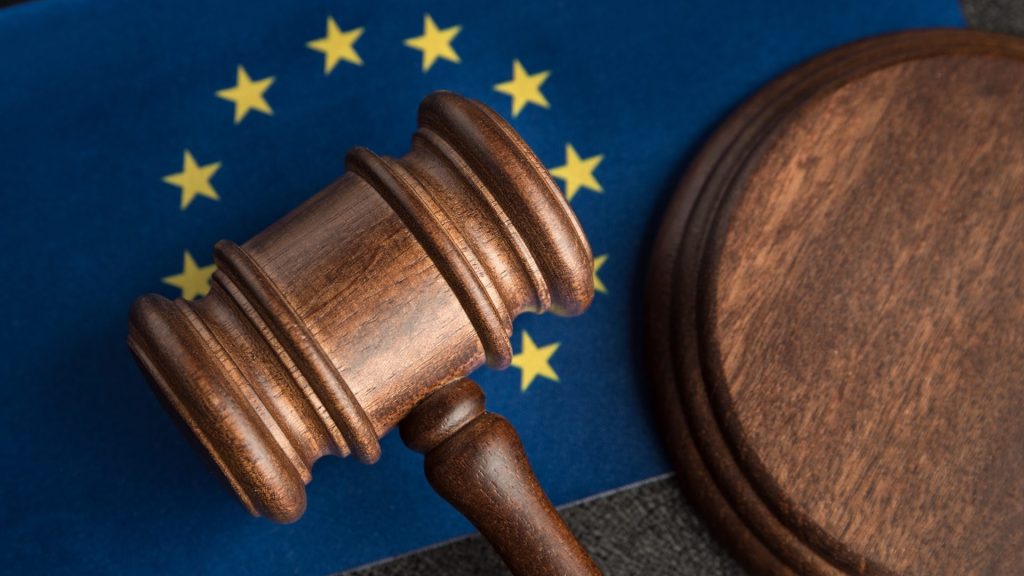
Trump vs Europe: Do EU laws discriminate against Big Tech?
In recent years, the European Union has implemented a series of regulations aimed at controlling the power of large technology companies, known as " Big Tech ".
These laws aim to ensure fair competition and protect consumers, but they have generated great controversy, especially in the United States.
Which companies are big tech?
Companies like Google, Amazon, Apple, Meta, and Microsoft, all based in the US, have been the most affected by these regulations , leading figures like Donald Trump to denounce these measures as non-tariff barriers that harm American firms.
But are these laws really an attack on US tech companies or simply a necessary regulation to balance the digital market?
In this article we look at key EU regulations and reactions from across the Atlantic.
Regulation in the EU
Europe has taken the lead in regulating digital giants with three main regulations that have changed the rules of the game: the Digital Markets Act (DMA), the Digital Services Act (DSA) and the General Data Protection Regulation (GDPR).
Let's see what they are and how they impact technology companies.
Digital Markets Law (DMA)
The Digital Markets Act (DMA) aims to regulate access gatekeepers, companies that act as key intermediaries between consumers and digital service providers.
Some of the companies affected by this law are Google (Alphabet), Amazon, Apple, Meta (Facebook, Instagram, WhatsApp) and Microsoft.
This regulation establishes that the "access guards":
- They may not promote their own services in a way that unfairly disadvantages competitors.
- Their platforms must be compatible with services from other companies.
- They cannot use the information of companies that use their platform to gain an advantage over them or compete unfairly.
- Users should be able to delete apps that come pre-installed on their phones, tablets or other devices if they don't need them.
Fines for non-compliance can reach up to 10% of the company's global turnover and up to 20% in the case of repeat offenses.
Digital Services Act (DSA)
The Digital Services Act (DSA) complements the DMA and focuses on regulating digital content and the transparency of large platforms.
The main obligations include:
- Platforms must act quickly to remove content that is illegal or potentially harmful to people, ensuring that it does not spread on their services.
- They cannot use private or sensitive information, such as people's health, religion or political orientation, to show them personalized ads.
- Platforms should explain how the systems that suggest posts, videos or products work, so that users know why they are seeing certain content.
- General Data Protection Regulation (GDPR)
Approved in 2018, the GDPR establishes strict rules on the use of personal data in the EU , directly impacting companies whose business model depends on the collection and exploitation of data, such as Google and Facebook.
The GDPR requires:
- Obtain explicit consent from users for the processing of their data.
- Allow users to request deletion of their personal data.
- Impose penalties of up to 4% of global turnover for non-compliance.
US complaints and Trump's reaction
Since the implementation of these regulations, the US government, under both the Trump and Biden administrations, has expressed concern about the impact on American businesses.
Trump, in particular, has denounced these laws as an "economic attack" against American Big Tech.
The main arguments of the US are:
- Discrimination against American companiesThe regulations mainly affect Google, Amazon, Meta, Apple and Microsoft, while few European companies face similar restrictions.
- No duty barriersFrom the US perspective, these laws are a covert form of protectionism that favours European technology companies.
- Iimpact on innovationAccording to the US, European regulations discourage innovation and investment in digital technology on the continent.
Trump has threatened retaliation, including:
- Tariffs on European products in response to the “Google Tax,” a tax that some European countries have implemented on the turnover of Big Tech.
- Investigations into EU regulations under the Office of the U.S. Trade Representative
Are these really non-tariff barriers?
From the EU's point of view , the regulations seek to ensure a fairer digital market, protecting consumers and preventing the abuse of dominant position by Big Tech.
However, it cannot be ignored that most of the affected companies are American , which reinforces the perception that these regulations have a protectionist component.
The EU's arguments include:
- They are not discriminatory measures, but regulations applicable to any company operating in Europe.
- La Competition in the digital market is essential, and these rules seek to avoid monopolies.
- La Data protection is a fundamental right and big tech companies must meet high standards.
On the other hand, some analysts argue that the EU has been more lax with its own tech companies and that European Big Tech companies do not face the same scrutiny as their American counterparts.
Conclusion
EU regulation has transformed the digital market, imposing strict rules that directly affect major US tech companies.
While the stated objective is to protect competition and consumer rights , from the US it is perceived as a strategy to curb Silicon Valley's dominance in the digital world.
Tensions between the US and EU over these regulations will continue in the coming years.
In the meantime, affected companies must adapt to this new regulatory environment or face multi-million dollar fines.
The question remains open:
Are these laws an act of covert protectionism or simply an attempt by the EU to balance the power in the digital economy?

RRYP Global , lawyers for technology companies.